What Is Mughal Art? Understanding the Floral Patterns That Inspire Dastkaari
If you've ever looked closely at a Dastkaari piece and noticed the layered blossoms, the trailing vines, the way every flower seems to lead into the next one — you're looking at a tradition that's over 400 years old.
Where Mughal art comes from
Mughal art developed under the Mughal Empire, which ruled much of South Asia from the early 1500s through the mid-1800s. The empire's rulers were prolific patrons of art and architecture, blending Persian, Central Asian, and Indian artistic traditions into something distinct — visible today in landmarks like the Taj Mahal, Red Fort, and countless miniature paintings, textiles, and decorative objects that have survived for centuries.
Floral motifs were central to almost all of it. Flowers appeared carved into marble, painted onto manuscripts, woven into carpets, and inlaid into walls — not as background decoration, but as the main event.
Why flowers, specifically?
In Mughal art, flowers weren't just decorative — they carried meaning. Gardens held deep symbolic and spiritual significance in Mughal culture, often representing paradise itself. Bringing floral patterns into everyday objects and architecture was a way of bringing a piece of that idea into daily life, rather than keeping it confined to actual gardens.
That's part of why the style has such staying power. A geometric pattern can feel purely decorative. A Mughal floral pattern is doing something more — it's referencing an entire worldview about beauty, abundance, and paradise, compressed into a repeating design.
The signature look
A few things tend to define Mughal floral work, and you'll spot all of them across Dastkaari pieces:
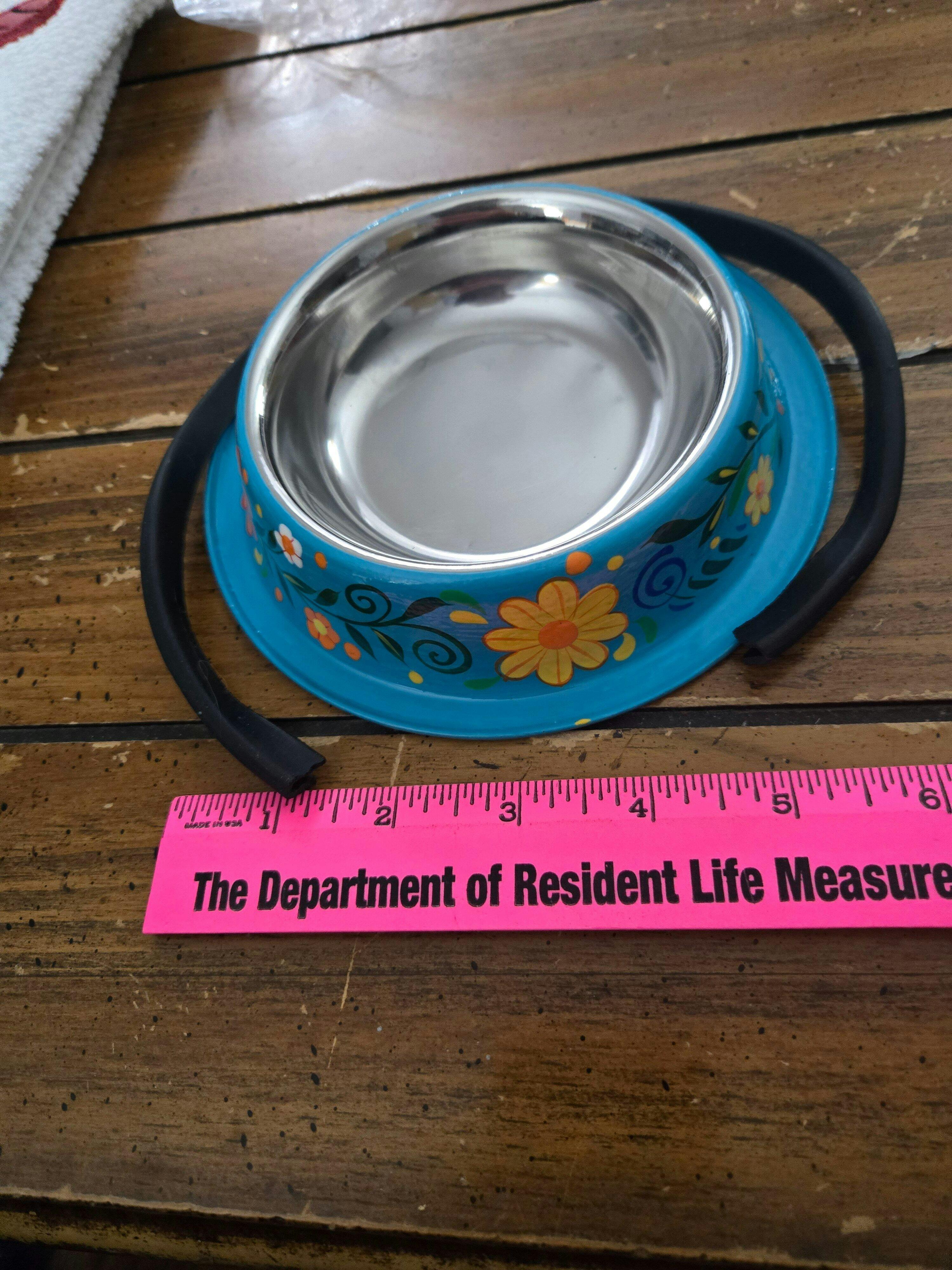
- Layered, symmetrical blossoms rather than single isolated flowers
- Trailing vines and leaves connecting each motif to the next, so the pattern feels continuous rather than scattered
- Rich, saturated color paired with gold detailing — a combination meant to evoke luxury and abundance
- Repetition with subtle variation — patterns that look identical at a glance but reveal small differences up close, much like a real garden never repeats a flower exactly
How this shows up in Dastkaari's work
Every hand-painted piece we make draws from this tradition — not copied directly from a specific historical artifact, but built in the same visual language: layered florals, connected vines, gold-outlined borders, color used generously rather than sparingly. It's the same instinct that shaped Mughal gardens and manuscripts centuries ago, just applied to a kettle you'll actually use tomorrow morning instead of a wall you'd only look at.
That's the throughline for us: this pattern language was never meant to be locked away in a museum. It was meant to be lived with.
Not another piece to admire on a shelf — a piece of art carrying four centuries of pattern into your everyday kitchen.
Stainless Steel Collection | Hand-Painted Artisan Kitchenware | Dastkaari