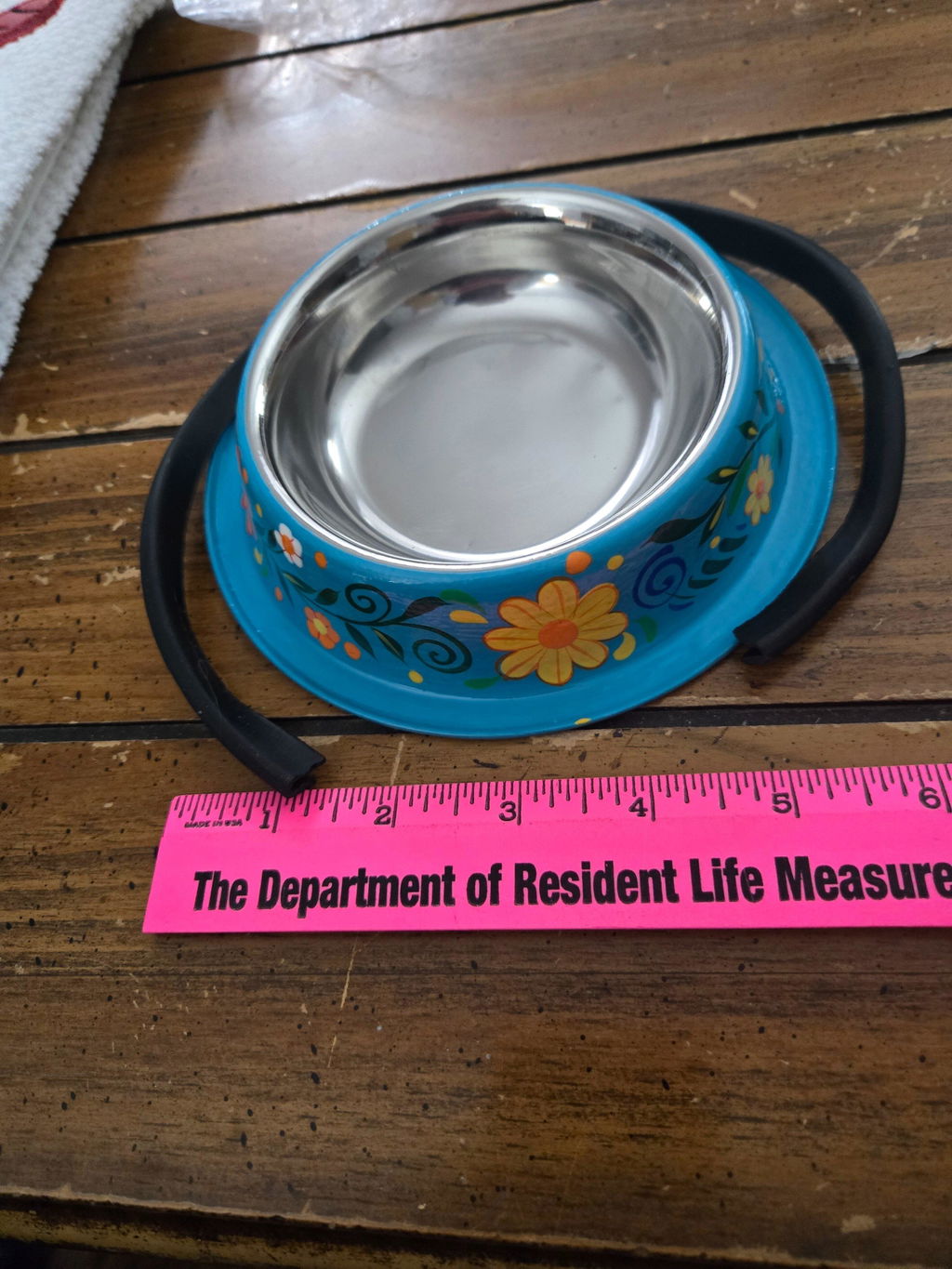
The Art of Hand-Painting: Why Every Dastkaari Piece Is Different
There's a moment that happens when someone receives a Dastkaari piece and finally understands what "hand-painted" actually means.
It's not when they open the box. It's when they look at the brush strokes up close — the way a gold line wavers just slightly, the way a petal seems to have been painted with just a touch more pressure than the one next to it, the way no two blossoms on the same piece are quite identical — and suddenly they realize: this wasn't printed. This wasn't stamped. This was made.
Hand-Painted vs. Everything Else
Most kitchenware and home décor you see — even pieces marketed as "artisan" — are either mass-produced with identical repeating patterns, or hand-painted by someone who's learned to paint the exact same design the exact same way over and over, dozens of times a day, for consistency and speed.
Dastkaari pieces are hand-painted differently. Each one follows the same overall pattern language (the Mughal florals, the truck art geometrics), but the execution is genuinely unique. The number of petals on a flower might shift between pieces. The intensity of a color might vary slightly. The spacing of a vine might be slightly tighter or looser depending on the curve of the pot itself.
To manufacturers, that's a flaw — inconsistency that lowers efficiency. To artists, it's the whole point. It's the difference between a reproduction and an original.
The skill it actually takes
Hand-painting a kettle isn't about having a steady hand, though that helps. It's about understanding how color layering works — knowing that you can't paint a darker shade over a lighter one and expect the same result, so you have to plan your color order from light to dark. It's about understanding the clay or metal you're working on — how much paint it will absorb, how fast it will dry, how heat will affect the final finish.
It's about pattern flow — looking at the three-dimensional shape of a pot and deciding where a pattern should stretch, where it should compress, where it should stop and start again, all while maintaining visual balance that works from every angle.
None of that can be standardized. Every piece of clay is slightly different. Every hand moving a brush works at a slightly different speed. Every artist interprets a pattern through their own eye and muscle memory.
That variability isn't a quality-control problem. It's proof the thing actually happened — that a human being made an intentional decision about every single brush stroke.
Why this matters for you
If you order a Dastkaari piece, you're not getting one of ten thousand identical ones stamped out by a machine. You're getting a piece that exists exactly once in the world, painted by one person, with all the small imperfections and variations that come with that.
Some people see that and worry — "Will it look exactly like the photo?" — and the honest answer is: not exactly. It will look like that piece, painted by that artist, with the same pattern and colors but with its own small variations. In six months or six years, you'll actually be able to point to those small differences and remember that this specific thing was made for you, not just manufactured.
That's not a compromise. That's the whole value of the thing.
The alternative isn't as romantic as it sounds
You could buy a machine-printed kettle that looks identical to every other machine-printed kettle. It would be cheaper. It would be perfectly consistent. You'd never have to wonder if yours looked "right."
But you'd also never get to see the evidence of a hand making it. You'd never have those small variations to notice and appreciate. You'd just have an object that exists in multitudes, interchangeable with all the others.
A hand-painted piece asks you to accept that uniqueness isn't perfection — that a slight wobble in a line, or a petal painted with slightly more enthusiasm than the others, is actually the proof that someone made this for you, and meant it.
____________________________________________________________________________________________
Not another piece to admire on a shelf — a piece of art someone made by hand, one brush stroke at a time.